
Florida’s housing market has been through a rough patch. Rising insurance premiums, pricey mortgages, and a surge in listings have drained momentum from places that once seemed unstoppable.
But that doesn’t mean every market is sliding.
A few Florida cities head into 2027 with advantages that could keep buyers interested, from comparatively cheap homes to solid job markets and the pull of coastal living. Several forecasts point to higher prices in these areas.
Below are five Florida cities where home values could rise in 2027, and why buyers may keep coming back.
Miami Could Be Florida’s Clearest Bet for Higher Prices
Miami has never lacked for attention. The tougher question is whether people will keep paying its steep home prices, and there are solid reasons to think many will.
For one thing, few other Florida cities match the mix of big-city opportunities and coastal living. Beaches sit on the doorstep, the dining and entertainment scene is vast, big-league teams play nearby, and an international airport makes travel simple.
For people moving from New York, California, or other high-cost parts of the country, Miami can offer a lifestyle that is hard to replicate.
Work draws people in, too. Miami has moved far past its old dependence on tourism. Finance and technology companies have grown their footprint in South Florida, while international trade, real estate, healthcare, and hospitality remain big employers. Florida’s absence of a personal state income tax gives higher earners another reason to consider relocating.
Then there is Miami’s global reach. The city has long drawn buyers from Latin America, Europe, and elsewhere, so demand doesn’t hinge entirely on people already living in Florida.
All of this bears on where prices go next. Miami is expensive, but desirable homes still find people with the money and motivation to buy them. If inventory shrinks at the same time, competition can intensify quickly.
One bullish forecast already exists. MIAMI REALTORS projected in September 2026 that South Florida’s median single-family home price could climb about 6% in 2027.
Affordability will remain a major hurdle, so another big boom is far from guaranteed. Still, Miami has an unusual ability to attract wealthy households from outside the local market. As long as people keep seeing the city as a place to live, work, and spend money, that demand provides house prices with solid footing.
Pensacola Is Forecast to Keep Moving Up
Pensacola lacks Miami’s skyscrapers and global name recognition. For some buyers, that is exactly the appeal.
This Panhandle city offers a calmer entry point to Florida coastal living. Gorgeous beaches are close, boating and fishing are a normal part of daily life, and residents can enjoy warm weather without being in the thick of one of the state’s largest metro areas.
Just as important for the housing market, Pensacola can still look affordable next to many better-known Florida destinations. That gap matters when buyers are watching every dollar. Someone who dreams of moving to Florida may love Miami, Naples, or the Keys but soon find the kind of house they want is out of budget. Looking farther north can open doors that don’t exist in those pricier areas.
Pensacola has more to offer than the beach.
The area’s military presence supplies a steady stream of residents, while healthcare, education, tourism, and other local employers give people reasons to settle for the long haul. Retirees can enjoy the coast and warm climate, while families may prefer Pensacola’s smaller-city atmosphere to the traffic and congestion found farther south.
Remote work adds one more factor. A buyer who rarely needs to go into an office has far more freedom to prioritize space, lower housing costs, and proximity to the water.
None of that means Pensacola is heading for a dramatic price surge. The current forecast is far more restrained. Zillow’s October 2026 forecast, as compiled by Home Value Pros, expects Pensacola metro home values to climb about 0.8% through September 2027. That slower pace could suit the city well.
Pensacola doesn’t need to become the next Miami to attract buyers. It just has to stay a place where a Florida coastal lifestyle still feels within reach. If affordability continues steering buyers away from the state’s costliest markets, Pensacola could end up on more house-hunting lists in 2027.
Tallahassee Could Post Modest but Positive Growth
Tallahassee rarely shows up near the top of lists of Florida’s hottest places to live. It is far from the state’s famous resort towns, and buyers don’t head there just to wake up beside the ocean. But a housing market does not have to be flashy to hold up well.
As the state capital, Tallahassee has government built into its local economy. Florida State University and Florida A&M University also call the city home, bringing in professors, staff, students, and their families year after year. That gives Tallahassee a steady base of people who actually need somewhere to live.
It also feels quite different from the Florida shown in tourism ads. Big oak trees, older neighborhoods, parks, college sports, and a slower pace give the city its own identity. Buyers who care more about space and everyday convenience than a short drive to a tourist beach may find plenty to like.
Price is another reason to take Tallahassee seriously.
Buying a house in South Florida has become out of reach for many households, especially once insurance and other ownership costs are added. Tallahassee lets buyers consider established neighborhoods and larger homes without jumping straight into Miami or Palm Beach County price ranges.
There is no obvious reason to expect prices to spike. That is not really Tallahassee’s story. Instead, the city has reliable demand that can keep the market going even when buyers elsewhere get jittery. State government is not going anywhere, and neither are its major universities.
Zillow’s October 2026 forecast, compiled by Home Value Pros, expects Tallahassee metro home values to rise roughly 0.2% through September 2027. That is hardly a boom. But for buyers and owners who prefer a steadier market, it may be more reassuring than it sounds.
Tallahassee’s case for growth is ultimately straightforward. People have jobs there, homes remain fairly affordable, and the city does not need a flood of newcomers to keep housing demand alive.
West Palm Beach Has the Ingredients for Another Strong Year
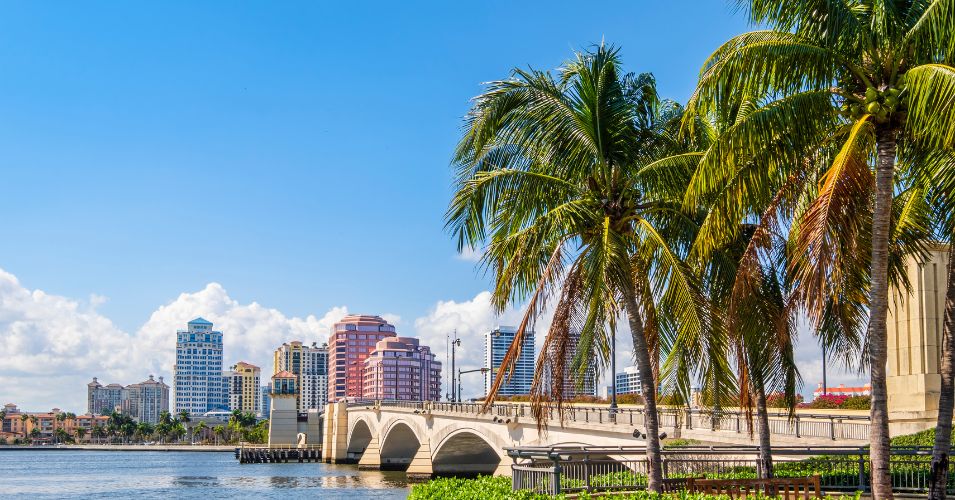
There was a time when West Palm Beach could easily be written off as a smaller neighbor of the more famous South Florida hotspots. That label fits less and less, and the city has become a destination in its own right.
Start downtown, where restaurants, shops, entertainment, and cultural attractions offer an active city lifestyle without a trip south to Miami. Add the water, warm weather, boating, golf, and easy beach access that continue to draw people to this part of Florida.
Across the Intracoastal Waterway sits Palm Beach, adding a very different force to the local property market: money.
Palm Beach County has long attracted wealthy residents, but its appeal to affluent newcomers and businesses has grown. Finance firms and other companies have opened or expanded offices there, giving professionals another reason to relocate permanently rather than simply visit for the winter. That can have an outsized impact on housing.
A buyer arriving with a high salary or substantial wealth is less likely to be put off by a price tag that would shut out an average household. Cash purchases can also reduce the importance of mortgage rates at the upper end.
West Palm Beach has also become better connected to the rest of South Florida. Brightline gives residents a rail option to reach Miami, Fort Lauderdale, and other destinations, making it more realistic to live farther from those job hubs.
Of course, prices can only climb so far. Insurance bills and the overall cost of owning a Florida home remain major factors. Even so, the big-picture outlook is encouraging. MIAMI REALTORS expects South Florida single-family home prices to rise in 2027 as listings tighten.
For West Palm Beach, the appeal isn’t one single thing. It is the mix that counts.
Wealth is nearby, businesses are settling in, transportation has improved, and the South Florida lifestyle still attracts newcomers. Combine those pieces, and West Palm Beach has a reasonable chance of seeing buyers compete more aggressively for desirable homes in 2027.
Fort Lauderdale Could Benefit From South Florida’s 2027 Recovery
Miami may draw more headlines, but it isn’t everyone’s idea of the ideal South Florida life.
Drive north, and Fort Lauderdale presents a different case. It still has the sunshine, beaches, restaurants, and nightlife visitors expect, but the city often feels easier to handle than its larger neighbor. For buyers who want South Florida without living in the thick of Miami, that is a real selling point.
The water is central to life here. Fort Lauderdale’s canals wind through residential neighborhoods throughout the city, and homes with docks give boat owners easy access to the open water. Throw in the beach and marina culture, and it’s easy to see why the city attracts second-home owners and affluent buyers alongside full-time residents.
Practical reasons also favor living here. Fort Lauderdale has its own job market and a busy international airport, so residents don’t have to lean on Miami for everything. Even so, Miami remains close enough for work, dinner, or a night out. Brightline rail service also makes trips to Miami and West Palm Beach easy for people who would rather leave the car at home.
Downtown Fort Lauderdale has transformed, too. New apartment towers and businesses have drawn more people into the core, giving buyers an alternative to the typical suburban or waterfront home.
Of course, ownership here doesn’t come cheap. Insurance costs can sting, especially near the coast, and plenty of buyers will find prices hard to justify. Those still shopping in Fort Lauderdale, however, often have a compelling reason for wanting to be there.
That could matter in 2027. MIAMI REALTORS expects single-family home prices across South Florida to climb as the inventory of homes for sale tightens.
If fewer good homes hit the market while buyers stay interested, sellers hold the upper hand. Fort Lauderdale’s beaches and canals will help, but its strongest card may be its location. It sits squarely in the middle of a wealthy, economically vital region where people still want homes.
Final Thoughts
Predicting house prices a year ahead is never an exact science. Mortgage rates can shift, insurance bills can climb, and buyers can turn cautious remarkably fast. Still, these five Florida markets have something going for them.
In some places, it is affordability. Elsewhere, well-paid jobs, wealthy newcomers, tight housing supply, or the appeal of living near the coast could keep buyers engaged. The key takeaway is that Florida is not one housing market. What happens in Pensacola can look very unlike what happens in Miami, even in the same year.
Today’s forecasts suggest some areas still have room for price gains in 2027, though the size of those gains could vary widely. Anyone planning to buy should look past statewide headlines and watch what is happening locally. When desirable homes become harder to find in a place people still want to move to, prices have a reason to rise.